Clair had meningitis at 15, leaving her with after-effects. It’s only now, over 30 years later, that she’s coming to terms with the impact of the disease.
After years of misdiagnosis and fighting to have her after-effects recognised, Clair has found ways to navigate, and celebrate, life. She tells us her story here:
“I was 15 and having the time of my life. I had worked hard at school to get great grades. I had an amazing group of friends who I saw regularly and I had so much vitality from my sheer love of life.
"Each morning my alarm would go off, I would bound out of bed, excited to see my friends and do well at school. I would get a buzz out of doing well and loved doing extra studying outside of class.
“One day I was at school complaining of a headache. I never got sick so this was unusual for me. I stayed home sick from school. The next day my mum came home for lunch and checked on me. I complained about the light and was experiencing double vision.
"She called my doctor to get an urgent home visit. He came to see me, lifted my head and I screamed. He suspected meningitis and called the hospital telling them to expect me.
Relief when they blocked out the light
“Once arriving at the hospital I was taken to a room. My memory there consists of just the relief when they blocked out the light. I drifted in and out of consciousness. My mum was told that I may not survive.
"She says her biggest memory is every time they opened the door to my room, the light would come in and I would scream in pain.
“I was told that I did not need a lumbar puncture, which I am very grateful for! I was diagnosed with meningitis and septicaemia and for 48 hours was at death's door.
"I was unaware of what was wrong with me, and as I fought the illness, I began to ask the nurses for things to do whilst I was in hospital with a ‘cold’. They tried to explain to me that I was seriously ill, and I would fall unconscious whilst still arguing with them that I wanted a puzzle or something to challenge me.
Bewildering to me
“Once I got home my mum kept me home from school for many weeks. I slept a lot and tried to find interest in anything again. I had virtually no attention span. When I was finally released I bounded to school and was hit with a very different reality.
"My memory had been wiped. I had missed a lot of school, and everything was now a struggle. I struggled with my energy levels, staying well and understanding absolutely everything. It was all bewildering to me.
“I lost all my friends. Their lives were going out, partying, meeting new people. But mine was now trying to understand what happened, and how to get through every day. We didn't fall out, I just didn't know how to be around them anymore.
"I was fighting a new battle, one that I didn’t have the capacity to understand or the energy to fight. I was utterly confused.
“My school reports went from glowing to a constant pressure that not only did I have three months of school to catch up on, I had also forgotten years of education and had to prepare for my GCSEs. It was a living nightmare.
No idea about my after-effects
“My teachers had no idea what I needed or that I may have after-effects. I recall losing consciousness during one of my GCSE exams. I woke up to blood all over my exam paper, and my teacher apologising to me, saying I had no choice but to carry on.
"It seemed like I was just in this constant haze of struggle, and no one could reach me. The doctors never really checked in on me, stating I had made a ‘full recovery’, despite all the issues I continued to have.
"But because they weren't obvious like a missing limb, the doctors were quick to say the effects would be something I'll just 'get over' - the most damaging and incorrect letter I could have received and stopped me getting help for 30 years.
"Some years ago I contacted Meningitis Now and it was explained to me that all these problems were caused by an acquired brain injury. I felt a sense of relief to know why. It was around the time of Covid, so following up more on it was difficult at the time. I also didn't know what to do with it yet. I later moved to Finland.
30 years highlighting issues
“I’m now 46 and have finally (recently) been officially diagnosed. I spent 30 years highlighting issues to various doctors in the UK, being brushed off and told I had ‘odd opinions’ and made to feel like I was lying about my struggles.
"In Finland I was determined to be heard. I pulled together my medical records, the notes from my visit from Meningitis Now, a list of everything I struggled with, school reports, and combined them into a folder that I took with me to all of my initial appointments.
"I would walk in, put my folder on their desk and tell them I would do anything to finally get this looked at. I was so done with struggling.
"The first doctor who assessed me asked me if I had double vision. I said I did, and she said that was the main marker that my brain was actively being damaged. I recalled having what felt like seizures for years, but didn't look like the ones on TV.
"As we looked into encephalitis, we discovered ‘focal point seizures’, an exact description of what I had experienced. I'd even been admitted to A&E after having them, and they still weren't recognised by the doctors there. I had been let down so many times.
War between chaos and structure
"Meeting that Finnish doctor validated everything and finally I was able to get the diagnosis I should have had 30 years ago. They diagnosed me with brain injury that presents like ADHD and autism.
"The brain injury mostly caused memory issues. And the other two are a war between chaos and structure. Working out how to manage my life, and managing it, is a full-time job. But I've managed to achieve things I previously thought impossible.
"To support me, I now externalise most of my memory. I keep absolutely everything I need to know in an Obsidian notebook stored in iCloud. No matter where I am, I can access my second brain.
"I take photographs often, to help me remember my life and the people in it. Unfortunately this doesn't work for feelings. If someone isn't regularly present, I can forget why they matter to me. For this I need to document memories with enough vivid detail to remember being with them.
"It's terrifying because recently my parents died, a week apart, very suddenly. I grieved deeply for the first three years. One of the things I'm scared of, is forgetting memories of them. But at the same time, recreating those memories causes pain.
"Also, because other people find grief difficult, I find myself not mentioning them so others don't feel uncomfortable, and then it feels like I'm pretending they never existed, as well as making those memories even harder to hold onto. It's a really hard situation.
Parents had been main support structure
"I also realised how much they were quietly helping me to get through life. When they were gone, so was my main support structure. I needed to learn how to better support myself, as well as advocate for myself to get the extra support I need.
"I identity with those with ADHD and autism, and simultaneously don't identify with them because I wasn't born with those, and have extra brain injury challenges.
"Neurodiversity education has helped me implement more supportive ways to live. I can have some light ADHD medication to assist but anything stronger puts me at more risk of seizures.
"I realise now that I need to find support that works with me, not treats me like I have no problems or pushes me to pretend I don't have any. I have been trying to make it work in traditional jobs and suffered burnout, but I have found that I do better in freelance and self-employment.
"I also entered into school where others have learning difficulties, and I finally feel like I'm in a group where I am understood. We're all at the same level, confused at the same things. And because I am not fighting against myself so much, I am able to be more of myself.
"I have been more confident in saying, ‘I don't understand, please explain’, and because everyone else around me feels the same, we're more likely to make light of it than feel the crippling shame I've carried most of my life.
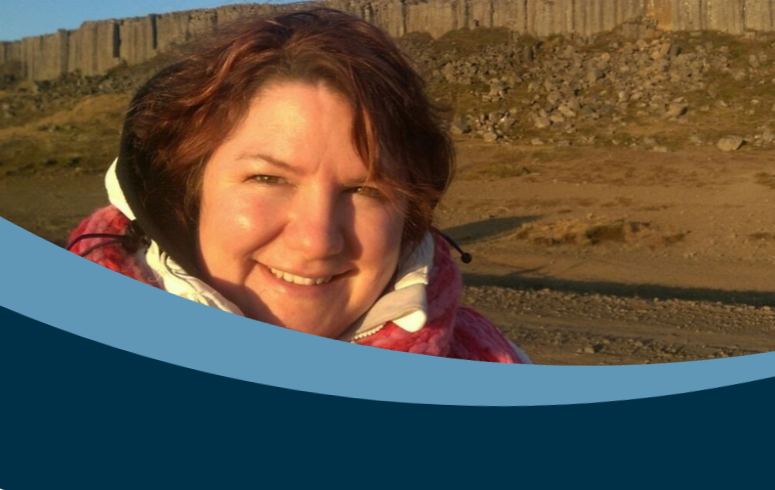
“I celebrate the anniversary of my diagnosis every year by doing something brave. In 2016 I went to Iceland solo, which was terrifying, but also one of the best things I’ve ever done. I connected to the island in a very deep and spiritual way. Another year I allowed myself to be filmed for Go Ape, overcoming my fear of heights. It's my way of sharing the gratitude that I am alive, and I got through another thing in life that didn't break me.”