“Meningitis Now helped us through one of the most difficult periods of our lives."
Fred was 15 when he contracted meningitis. His mum, Jane, from Weymouth in Dorset, tells us how fast the disease took hold and the journey the family have been on since.
“It was a Tuesday lunchtime in March 2026, a day that started like any other, but one that would change our lives forever.
“I work at the same school that Fred attends, and at lunchtime he came to find me, complaining of a really bad headache and saying he felt unwell.
“Like many parents of teenagers, I questioned whether he was genuinely ill or perhaps trying to get out of something at school. I told him that if he was feeling that poorly, he would need to get on his bike and cycle home. At that point, I thought nothing more of it. I had absolutely no idea what was about to unfold.
“About an hour later, my phone rang. It was Fred. He was crying and telling me, ‘Get home now, Mum. I'm really ill.’
“I immediately left work and rushed home.
What I found was frightening
“What I found when I got there was frightening. Fred collapsed at the top of the stairs, shaking uncontrollably and saying he was freezing cold, despite having an extremely high temperature.
“My husband Tim and I took him straight to Dorset County Hospital in Dorchester.
“At the hospital, Fred underwent various tests. His heart rate was very high, he had a temperature, and he was clearly unwell. Swabs were taken, but they all came back negative. We were told that he most likely had a virus and were sent home.
“As we were leaving, I remember a nurse saying to us that we needed to keep a close eye on him because the swabs might have been taken too early to detect anything. Those words have stayed with me.
Our world fell apart
“We took Fred home and put him to bed, hoping that a good night's sleep would help him feel better.
“The following morning was when our world fell apart. At around 6am on Wednesday, I got up to get ready for work. Before leaving, I went to check on Fred. What I saw terrified me.
“His skin was mottled and discoloured. When I pressed on the marks, they didn't disappear. His breathing was laboured, and I knew immediately that something was seriously wrong.
“I rang 999. During the call, I was asked to send a video showing Fred's skin so that the medical team could see what was happening. Thankfully, the ambulance arrived very quickly.
“The paramedics immediately recognised how seriously ill Fred was. He was taken into the ambulance and treatment for suspected meningitis was started straight away.
“Nothing could have prepared us for what happened next.
Take things hour by hour
“We were told that Fred was critically ill and that we needed to take things hour by hour because the doctors didn't know whether he would survive. I cannot begin to describe what hearing those words does to a parent.
“In that moment, it felt as though my whole world had ended. Tim and I completely broke down. We collapsed, sobbing, terrified that we were going to lose our boy.
“You never imagine that you will be standing in a hospital being told that your child might not make it.
“Fred had meningococcal meningitis and septicaemia. He was moved into a specialist isolation room, where we had to wear protective masks and aprons before entering. Everything suddenly felt so frightening and serious.
“For the first 48 hours, Fred had a nurse with him providing constant, one-to-one care.
“I will never forget those nurses. They were absolutely incredible. The care, compassion and dedication they showed Fred, and us as his parents, was something we will be forever grateful for.
“Thankfully, Fred began responding well to treatment. After a few days, he was well enough to be moved to Kingfisher Ward, the children's ward at Dorset County Hospital.
Still nowhere near out of the woods
“Although this was a huge relief, we were still nowhere near out of the woods. Fred suffered a setback while on the ward, but the doctors and nurses were immediately on top of it.
“I spent the first few nights staying with Fred in hospital. I couldn't bear to leave him. I wanted to be there every time he opened his eyes, every time he needed something, just to know that he was still okay.
“But the fear and exhaustion were beginning to take their toll on me. On the third night, while I was at home, I suffered a panic attack so severe that an ambulance had to be called for me.
“I think everything that had happened, the terror of nearly losing Fred, the lack of sleep and the overwhelming emotions, had finally caught up with me.
“One memory that will stay with me forever is the first time we were able to take Fred outside for some fresh air. He was in a wheelchair, and we were so excited just to get him out of the hospital environment for a little while.
“But the daylight was so bright and uncomfortable for him that he had to put on his dad's sunglasses. It was such a small moment, but it reminded us just how much his body had been through and how far he still had to go.
“And then came the day we had been praying for. We were finally allowed to bring Fred home. I will never, ever forget that feeling.
Relief, happiness and gratitude on coming home
“The relief, the happiness, the overwhelming gratitude. We were absolutely elated. Our boy was coming home.
“Although Fred had been discharged from hospital, his treatment wasn't quite finished. For seven days, we had to take him back to Dorset County Hospital every day so that he could receive intravenous antibiotics through a cannula and drip. After that, his recovery continued at home.
“It was slow, and there were difficult days, but we surrounded him with love, care and reassurance. We had been given something that, for a terrifying period of time, we thought we might lose. We had our Fred back.
“Looking back, one of the most frightening things about meningococcal meningitis and septicaemia is just how quickly everything happened.
No gradual warning, no time to prepare
“There was no gradual warning, no time to prepare ourselves, and no way we could have imagined just how seriously ill he was becoming.
“I often think back to that Tuesday lunchtime when Fred came to find me at school. I had no idea that within hours we would be facing the possibility of losing him.
“That is why sharing Fred's story is so important to me. Meningitis and septicaemia can develop incredibly quickly. The symptoms don't always appear together, and you should never wait for a rash before seeking medical help. If something doesn't feel right, trust your instincts.
“If sharing what happened to Fred helps even one parent recognise the warning signs and seek urgent medical attention, then telling our story will have been worth it.
“We will be forever grateful to the paramedics, doctors and nurses who cared for Fred and gave us the chance to bring our boy home.
“Although Fred was finally home and physically recovering, the emotional impact of everything we had been through was enormous.
The emotional aftermath – and the value of counselling
“People often focus on the physical recovery from meningitis and septicaemia, but I don't think anyone can truly prepare you for the emotional aftermath, not just for the person who has been ill, but for the whole family.
“We had come so close to losing Fred, and although we were incredibly grateful to have him home, the fear, anxiety and memories of those terrifying days didn't simply disappear.
“This is where Meningitis Now became such an important part of our journey.
“The charity funded counselling sessions for both Fred and me, and I honestly cannot put into words how much this helped us. We had separate sessions, which meant we each had our own safe space to talk openly about what we had experienced, how we were feeling and the impact it had on us individually.
“Our counsellor was absolutely amazing. She was compassionate, understanding and supportive, and made us both feel comfortable enough to talk about things that were incredibly difficult to put into words.
“For Fred, the counselling gave him the opportunity to process what had happened to him, away from the worry of upsetting us as his parents.
“For me, it was a chance to talk about the sheer terror of nearly losing my son, the overwhelming emotions I had experienced and the anxiety that stayed with me long after he had left hospital.
“Sometimes, when you're a parent, you spend so much time being strong for your child that you don't realise just how much you are struggling yourself. Those sessions gave me the space to acknowledge those feelings and begin to work through them.
“The counselling made such a difference to both of us. It helped us understand our emotions, come to terms with what had happened and slowly begin to move forward.
“I will always be incredibly grateful to Meningitis Now for funding this support. It wasn't just about helping Fred recover physically; it was about helping us both heal emotionally.
Never forget Meningitis Now’s understanding and support
“Meningitis Now helped us through one of the most difficult periods of our lives, and we will never forget the kindness, understanding and support we received.
“I genuinely don't think people realise just how valuable the support of a charity like Meningitis Now can be until they find themselves in a situation like ours.
“Although Fred survived meningococcal meningitis and septicaemia, and we are incredibly lucky to still have him with us, our lives have never quite been the same.
“People often assume that once someone has been discharged from hospital and is back home, everything returns to normal. But the reality is very different. Meningitis doesn't just affect the person who becomes ill; it affects the whole family, and the emotional scars can last long after the physical ones have healed.
“For Fred, life has changed in ways that people don't always see. Before becoming ill, he was getting on with life as a normal teenager. Suddenly, everything stopped. He missed around 14 weeks of school during a really important stage of his education, and returning to Year 11 in September has been a challenge.
“He is still experiencing difficulties with processing information, concentration and keeping up with the demands of school. Things that might once have seemed straightforward can now take him longer, and that is incredibly difficult for a young person who just wants to be like everyone else.
“As his mum, it is heartbreaking to see him having to work that much harder because of something completely beyond his control. We are so proud of how far he has come, but we also know that his recovery is still ongoing.
Always carry the fear
“For me personally, the experience has changed the way I look at life. I don't think I will ever forget the sight of Fred collapsed at the top of the stairs, or the moment the doctors told us they didn't know whether he would survive.
“Those memories don't just disappear.
“I think when you have come so close to losing your child, a part of you will always carry that fear. Even now, something as simple as Fred saying he has a headache or doesn't feel well can bring those terrifying memories flooding back.
“As parents, Tim and I are incredibly grateful, but we are also much more aware of how quickly life can change. We know first-hand that you can go from having a perfectly ordinary family day to facing your worst nightmare in a matter of hours.
“It has made us appreciate the little things so much more. Things we might previously have taken for granted, like having dinner together, hearing Fred laughing, or simply knowing he is safe at home, now mean everything.
“But recovery isn't something that happens overnight, and there isn't a date when you can simply say everything is back to normal.
“As a family, we are still learning to navigate life after meningitis. We are trying to find the balance between protecting Fred and allowing him to be the independent teenager he deserves to be. We don't want what happened to define him, but equally, we cannot ignore the impact it has had.
Determination to help others
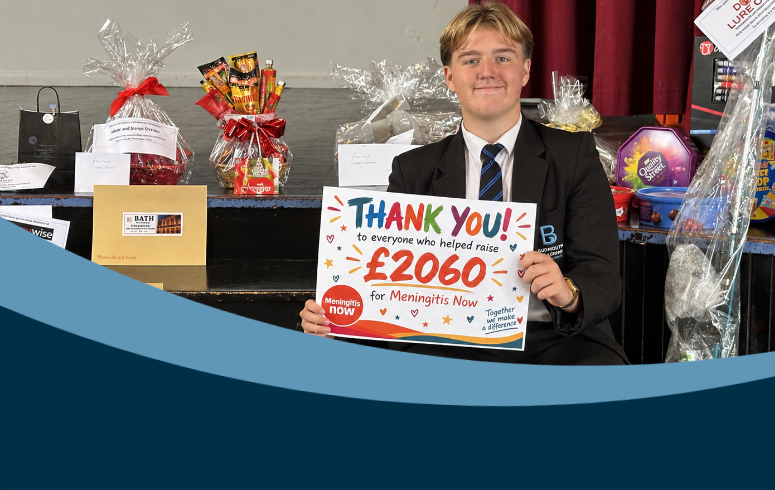
“One of the most positive things to come out of such a frightening experience has been Fred's determination to help others. Alongside his friend Jack, who also had meningitis, they organised fundraising activities for Meningitis Now, raising an incredible £2,060.
“Seeing Fred turn something so traumatic into something positive has made us unbelievably proud. Knowing that the money they raised could help another family receive the same wonderful support that we did means so much to us.
“Meningitis may have changed our lives forever, but it has also shown us just how precious life is, how strong Fred can be, and how important it is to support one another.
“We are the lucky ones. We got to bring our boy home. We know that, heartbreakingly, not every family gets that opportunity, and that is something we will never take for granted.
“Our journey isn't over, and there are still challenges ahead, but we face them together, as a family.
“If there is one thing I want people to understand, it is that meningitis doesn't end when you leave the hospital. The physical, emotional and psychological effects can stay with you and your family for a very long time.
“We will be forever grateful that Fred is still here, and we will continue to share his story in the hope that it raises awareness, helps others recognise the symptoms and perhaps even saves another family's child.”